
CAN data · J1939, J1708, light-vehicle CAN
The vehicle’s own numbers, not an estimate.
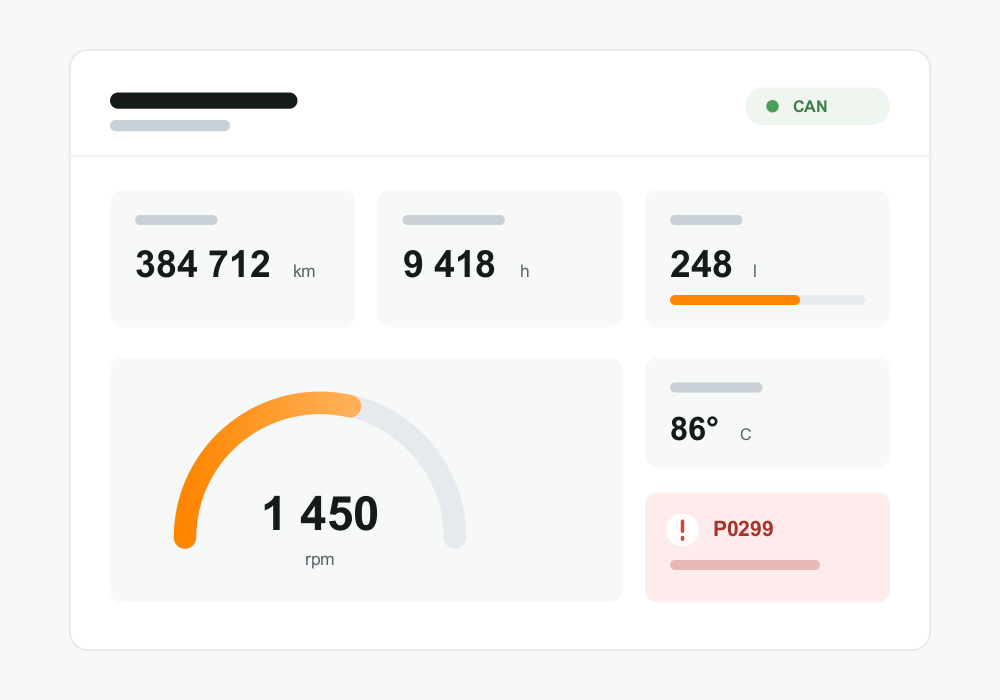
Mileage, engine hours, fuel, revs, temperature and fault codes read straight off the bus the vehicle already talks on — so a report says what the dashboard says.
Heavy trucks and light vehicles · No cut wires · Same device as the tracker
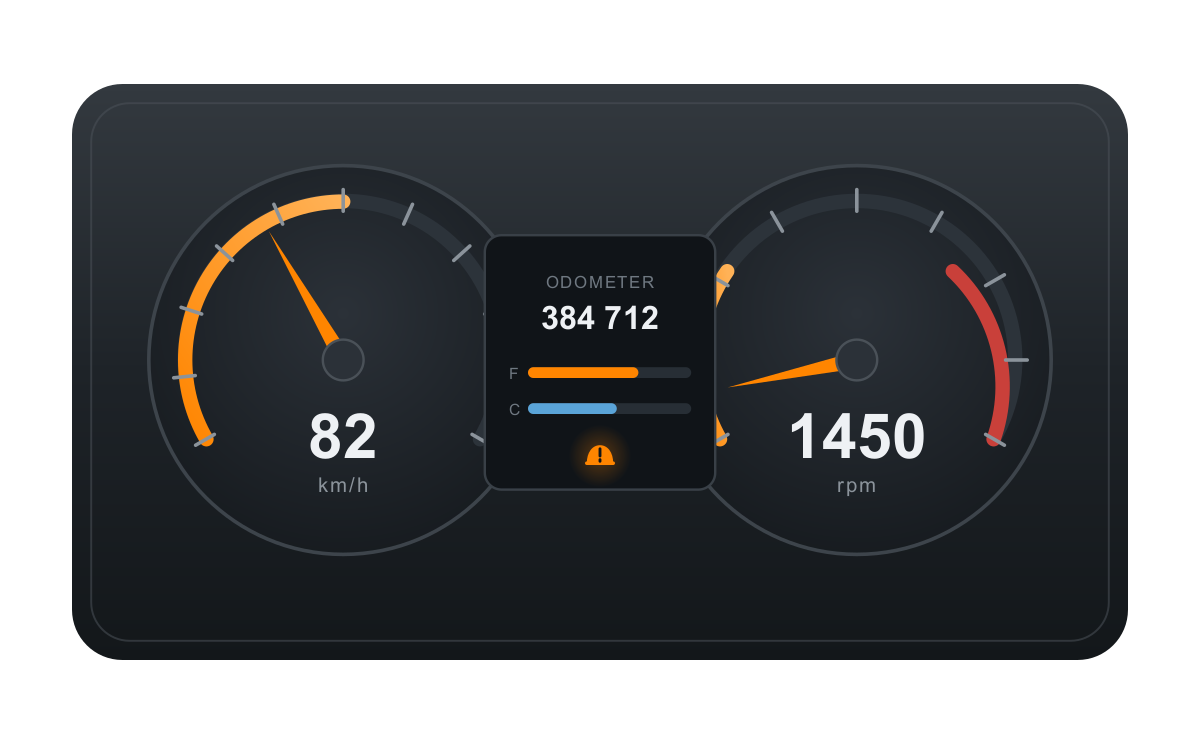
What comes off the bus
- Mileage
The odometer the vehicle keeps itself, not a distance added up from GPS points.
- Engine hours
Time the engine actually ran, which is what service intervals are counted in.
- Fuel level and used
Level over time and fuel consumed, per vehicle and per driver.
- Engine RPM
Revs, load and idling — the difference between a hard driver and a careful one.
- Coolant temperature
A rising temperature is a warning; on a report it is a number you can act on.
- Fault codes (DTC)
The codes the workshop reads, arriving while the vehicle is still on the road.
- J1939 and J1708
Heavy trucks and buses, plus light-vehicle CAN and OBD on vans and cars.
- Driver identification
Tie the readings to the person driving, not only to the vehicle.
Read, not guessed
A tracker without CAN has to infer things. Distance comes from adding up GPS positions, consumption from a formula, engine hours from ignition state. Each is close, and each is wrong by a little — enough that nobody quite trusts the report.
Read off the bus, the numbers are the vehicle’s own. The mileage on the report is the mileage on the dashboard, and an argument about whose figure is right stops before it starts.
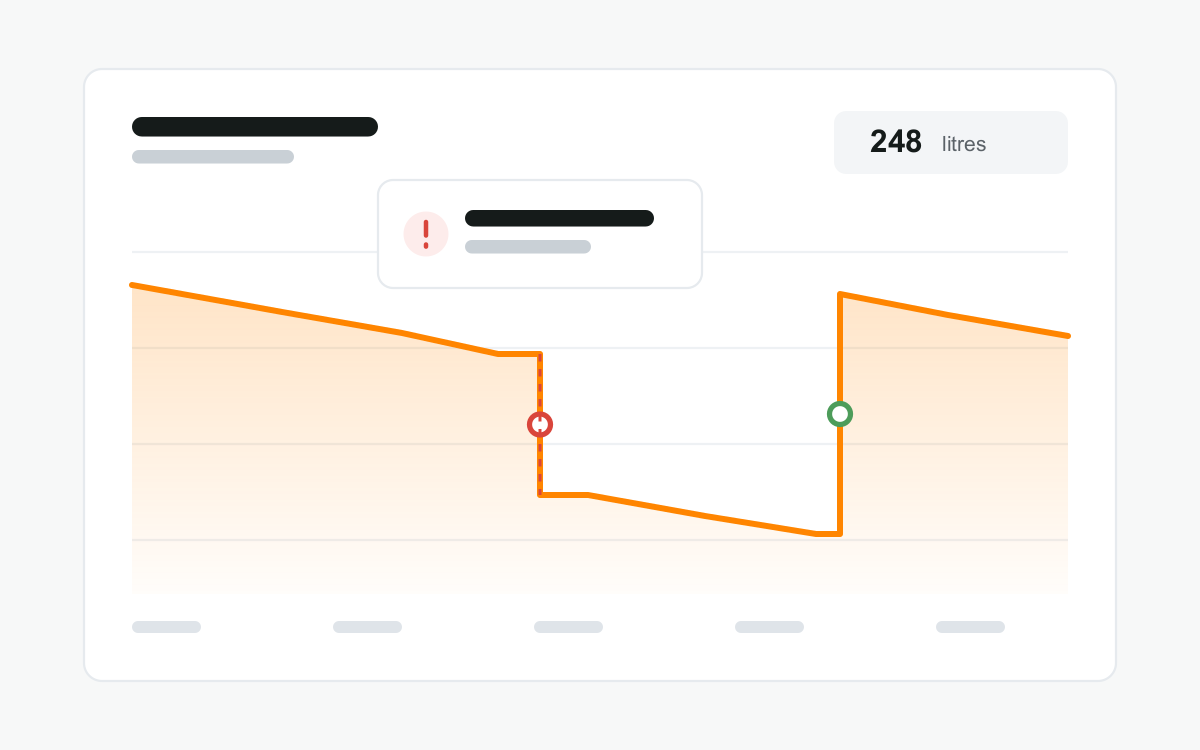
Fuel that adds up
Where the vehicle reports fuel over the bus, you get the tank level over time and the fuel it has burned — no probe to fit, no calibration to drift.
A slow drain looks like a slow drain, and a sudden drop looks like what it is, with the time and the place attached. Refills are recorded with their quantity, so an invoice can be checked against what actually went into the tank.
Faults before breakdowns
Diagnostic trouble codes come off the bus as they are raised. A code for a boost leak or a sensor fault reaches the platform while the vehicle is still moving, not when it stops at the roadside.
With engine hours and mileage read from the same source, service intervals stop being a guess: the reminder fires on what the engine has actually done.
What it takes
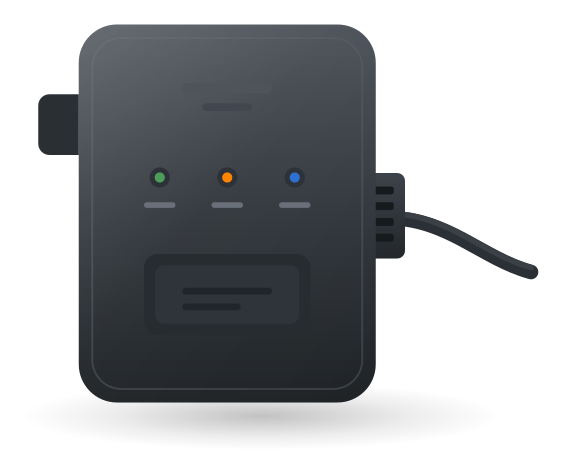
A telematics unit is connected to the vehicle’s bus — contactlessly on most heavy trucks, so nothing is cut and the manufacturer’s warranty is not touched. On light vehicles it connects over CAN or the diagnostic port.
It is the same device that does the tracking: one installation, one subscription, position and vehicle data on the same platform.
Worth knowing
- what a vehicle publishes on its bus differs by make, model and year — we confirm before ordering
- most heavy trucks are read contactlessly, with nothing cut into the wiring
- where the bus gives no fuel data, a probe in the tank does the same job
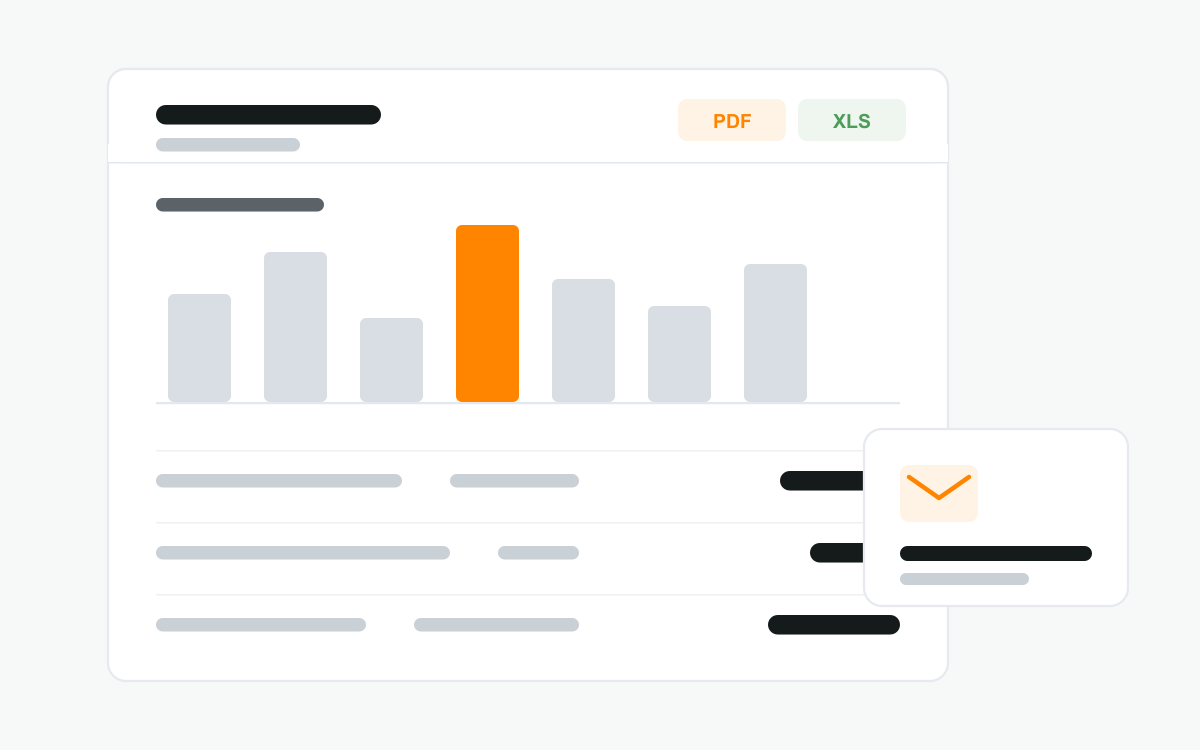
- readings feed the same reports as everything else: per vehicle, per driver, per period
- the data leaves through the API too, into whatever system you already run
Frequently asked questions
Will it work on our trucks?
Almost certainly. Heavy trucks publish J1939 or J1708, and both are read. Send us the make, model and year and we will confirm what that vehicle gives before anything is ordered.
Does anything get cut into the wiring?
On most heavy trucks, no — the bus is read contactlessly. On light vehicles the connection is made over CAN or the diagnostic port.
What if the vehicle does not report fuel?
Then a probe is fitted in the tank and measures the level directly. The reports are the same either way.
Is this a separate device from the tracker?
No. The same unit does both, so there is one installation and one subscription.
Can the data go into our own system?
Yes, through the API, without anyone retyping it.
Request a quote
Tell us how many vehicles you run and what they are, and we will put together a quote with an exact price per vehicle.
Or call +389 2 306 1625 — Kairska 6, Skopje.